- New
How an Investment Thesis Became a Healthcare Sovereignty Strategy
African Medical Centre of Excellence (AMCE)
Partners: JICA x Afreximbank
JICA Headquarters: Japan | Afreximbank Headquarters: Egypt
Project Country: Nigeria
Keywords: blended finance, healthcare sovereignty, tertiary care
Summary
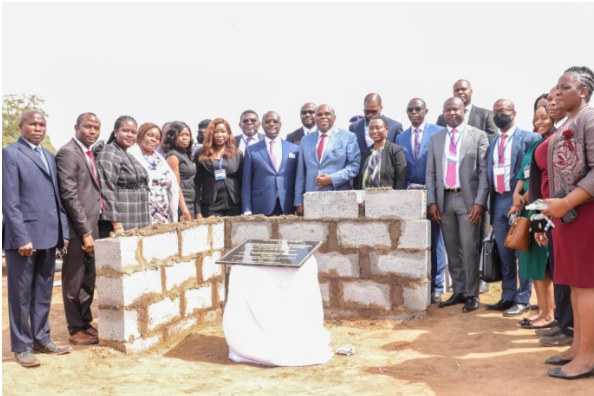
In Abuja, a hospital opened in June 2025 with an ambition that extends far beyond its walls: to stem and reverse decades of outbound medical travel, capital flight, and brain drain and transform them into a domestic engine for quality care, talent development, and system resilience. Multilateral Development Bank, African Export-Import Bank (Afreximbank) alongside partners such as Kings College Hospital London and others didn't just finance this idea--it conceived it, sponsored it, owned the risk, and set out to prove a new way to build healthcare systems in Africa. On the debt side, Afreximbank's own lending was provided and backed by long-term debt financing from JICA in partnership with two major Japanese banks.
Key Figures
| US$ 300M Total Project Cost |
70%+ Afreximbank Majority Equity Stake |
US$ 75M Seed Grant Committed to AfLSF |
Partners' Information
〈JICA〉
The Japan International Cooperation Agency (JICA) is Japan's development agency and a provider of development finance for sustainable growth. By combining public and private resources, JICA supports investments that strengthen health systems, expand access to quality healthcare, and generate development impact. Through partnerships with financial institutions and private investors, JICA mobilizes long-term capital to address global challenges.
〈Afreximbank〉
African Export-Import Bank (Afreximbank) is a Pan-African multilateral financial institution mandated to finance and promote intra- and extra-African trade. For over 30 years, the Bank has been deploying innovative structures to deliver financing solutions that support the transformation of the structure of Africa's trade, accelerating industrialisation and intra-regional trade, thereby boosting economic expansion in Africa. A strong supporter of the African Continental Free Trade Agreement (AfCFTA), Afreximbank has launched a Pan-African Payment and Settlement System (PAPSS) that was adopted by the African Union (AU) as the payment and settlement platform to underpin the implementation of the AfCFTA. Working with the AfCFTA Secretariat and the AU, the Bank has set up a US$10 billion Adjustment Fund to support countries effectively participating in the AfCFTA. At the end of December 2025, Afreximbank's total assets and contingencies stood at over US$48.5 billion, and its shareholder funds amounted to US$8.4 billion. Afreximbank has investment grade ratings assigned by China Chengxin International Credit Rating Co., Ltd (CCXI) (AAA), GCR (A), Japan Credit Rating Agency (JCR) (A-), Moody's (Baa2) and S&P Global Ratings (BBB+). The Bank is headquartered in Cairo, Egypt.
Background & Challenge
When serious illness struck--particularly cancers, hematologic conditions, or complex cardiovascular disease--patients who could afford it left the continent for care in Europe, the Middle East, or Asia. Those journeys exported not only people but resources: billions of dollars each year in net wealth outflows. Meanwhile, the burden of non-communicable diseases was rising faster than tertiary infrastructure could be built, and the very professionals needed to provide advanced care were carving their careers abroad.
Afreximbank reframed this not just as a healthcare gap but as a structural market failure--a system in which demand for high-quality care existed, but investable supply and trusted clinical governance did not.
Approach
The investment thesis was crisp: redirect net wealth outflows from outbound medical tourism into domestic tertiary assets, allow quality and access to coexist, and let the resulting confidence crowd in commercial capital over time. To act on it, Afreximbank would become a project sponsor--absorbing early-stage risk and proving that internationally benchmarked tertiary care is investable in African markets. This was blended finance by design: patient development capital upfront, with commercial capital crowding in as risk declined.
The capital structure:
- Total project cost: roughly USD 300 million
- Equity: Afreximbank majority stake (exceeding 70%), alongside the Bank of Industry (BOI) and NNPCL
- Debt: Afreximbank lending backed by long-term financing from JICA, in partnership with MUFG and SMBC
- Local Nigerian banks stepped in with working-capital facilities only after commissioning--evidence that when risk is sequenced, commercial participation follows
Quality would make or break the thesis. Afreximbank therefore anchored AMCE to a long-term technical partnership with King's College Hospital London (KCH). Government action made this possible in practice: the Nigerian government provided land, customs and tax exemptions, and political support.
Impact & Results
The AMCE model insists that excellence and access are not opposites. Pricing for key diagnostics and treatments was set within ±20% of prevailing market rates, with semi-private wards broadening the patient base--kept competitive by customs and tax exemptions negotiated under the host-country agreement.
In March 2025, the board of Afreximbank approved the establishment of the African Life Sciences Foundation (AfLSF). With USD 75 million already committed by the bank, the Foundation subsidizes care for economically vulnerable patients and counters historic under-investment in diseases disproportionately affecting African populations--like sickle-cell anaemia.
Future Outlook
With AMCE Abuja serving as a pilot and proof of concept, Afreximbank is exploring expansion into East and Central Africa. AMCE offers a practical blueprint for structuring blended finance where early-stage risk is high but long-term demand--and system-level impact--are substantial.
Over the next five years, the AfLSF aims to attract funding to scale its objectives, ensure economically vulnerable patients access quality care, and build a sustainable life sciences ecosystem in Africa.