
- New
Bridging Capital & Expertise Gaps to Scale Inclusive Health Protection
Swiss Capacity Building Facility
Headquarters: Switzerland
Project Countries: Rwanda, Ghana, Malawi
Keywords: catalytic funding, inclusive insurance, health protection, hospicash, savings groups, capacity building, public-private platform, financial literacy, post-project tracking
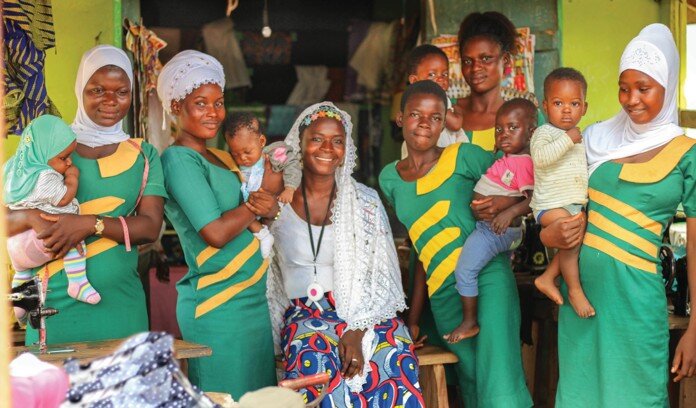
Photo courtesy of VisionFund International.
Summary
In many low- and middle-income countries (LMICs), health issues remain one of the fastest routes into financial distress. Even where national coverage exists, households routinely face a second layer of cost - transport, medicines not covered, lost wages, and the need to borrow at precisely the wrong moment. Swiss Capacity Building Facility (SCBF) was established to address such critical market failures by channeling catalytic funding and private-sector know-how into designing, testing, and scaling inclusive financial solutions that reduce vulnerability.
To that end, a significant share of SCBF's portfolio focuses on improving access to care and reducing out-of-pocket costs.
Key Figures
| More than 8M+ Low-Income Clients Reached |
74% of Clients Reported a Decrease in Healthcare Self-Paid Costs |
50% (Ghana) & 15% (Malawi) Increase in Medical & Health Visits among Covered Clients |
Partner's Information
The Swiss Capacity Building Facility (SCBF) is a unique membership-based organisation that brings together public and private sector partners to advance responsible financial inclusion across emerging markets. By blending resources from its members, SCBF enables financial service providers, impact-driven organisations, and social enterprises to test, develop and scale client-centric financial solutions through catalytic funding, including technical assistance, repayable grants, and impact-linked finance. To date, SCBF has co-funded over 238 projects across 53 countries, enabling 8.7 million low-income clients - 48% women and 65% from rural communities - to access financial services that strengthen resilience, improve livelihoods, and promote economic empowerment.
Background & Challenge
SCBF focuses on a segment of the market that traditional finance largely does not cover: inclusive insurance and health-financing providers that are beyond pre-seed and show early traction, but still lack the capital and capabilities needed to scale. These organizations may already have a client base but remain "too risky" for banks and "too small" for institutional capital. In insurance, that challenge is amplified by specialist gaps - pricing, actuarial work, reinsurance, claims management, and the distribution economics that determine whether a product can survive beyond a subsidized pilot.
SCBF describes this bottleneck as the "pioneer gap" and positions itself as a bridge across it. The aim is not to subsidize operations indefinitely, but to fund the technical and operational build-out that turns a pilot into a repeatable, investable model for follow-on sustainable growth.
Approach
SCBF's core advantage is its ability to combine catalytic funding with hands-on expertise from a diverse member base spanning public and private actors. Its value is not that it delivers technical assistance itself, but that it funds it and reinforces it through governance, specialist review, and practical monitoring. Experienced insurers and financial-sector members strengthen projects before funding decisions are made and remain engaged during execution. Acting as the central bridge, SCBF sources projects through member and sector networks, supports implementation through local and international partners closest to clients, and adds targeted technical inputs where execution risk is highest.
SCBF currently deploys three instruments, each addressing a distinct barrier to scale:
1. Technical assistance grants are used to fund product design, market learning, operational build-out, and capability development
2. Repayable grants respond to a later-stage need
3. Impact-linked finance is used more selectively and targets cases where incentives can shift behavior beyond the pilot
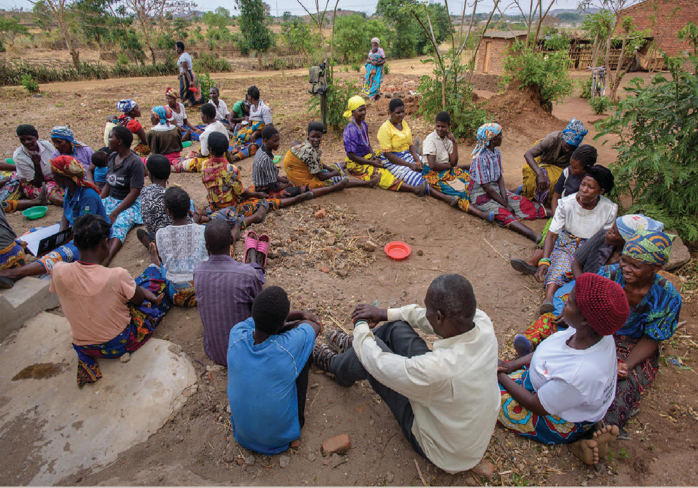
Photo courtesy of VisionFund International.
Impact & Results
Overall, by the end of 2025, SCBF has reached more than 8.7 million low-income clients, with roughly a quarter through health or life insurance.
By the completion of all three projects with VisionFund International in three different countries, a total of 35,425 policies covering 136,000 lives had been issued, nearly 1,900 claims had been paid, and around 67,000 people had received insurance training. The program in Rwanda catalyzed a 25% market expansion within the segment. In addition, in Ghana & Malawi, 74% of clients reported a decrease in healthcare costs; increase in health visits for 50% of clients in Ghana and 15% in Malawi, showing gains in both financial stability and access to healthcare. During this post-project phase, the outreach grew substantially, reaching cumulatively more than 300,000 people (including family members). The insurance products remained active and relevant, with more than 5,000 claims paid out, amounting to around CHF 88,000. Financial literacy and awareness efforts also continued to expand, reaching around 250,000 people.

Photo courtesy of VisionFund International.
Future Outlook
After co-funding more than 238 projects across 53 countries, SCBF's funding model has delivered impressive outreach and leverage results. On average, projects have expanded outreach to low-income clients by 2.4 times within three years of post-project. In addition, for every CHF 1 provided by SCBF, partners have mobilized CHF 3.46 in additional financial and in-kind resources. Going forward, SCBF is broadening its mandate to address unmet financial needs through collaborative solution development with members and integration into existing grantees' product portfolios or business models. This evolved approach further harnesses SCBF's member network to move quickly from design through execution to scalable social impact.