- New
Building Community Resilience Through Impact Finance
Developing World Markets (DWM)
Headquarters: USA
Project Country: Over 60 developing countries
Keywords: impact investing, innovative finance, financial inclusion, blended finance
Summary
While impact investment in global health often focuses on areas that directly improve outcomes, such as healthcare delivery and medical innovation, access to finance can also shape health by strengthening its underlying determinants such as infrastructure, living conditions, and household resilience. This has been Developing World Markets (DWM)'s approach to impact investing for the last 25 years. A pioneer in innovative finance, the impact investment manager DWM uses a repeatable financing approach that can scale beyond grant cycles by providing debt through local institutions that serve low-income communities and structuring that capital around defined impact goals and operating realities.
Key Figures
| $3.15B+ Total Capital Arranged / Invested |
25.5M Beneficiaries / End Clients |
~$590M Current Portfolio Size |
Partner's Information
Developing World Markets (DWM) is a leading emerging markets asset manager and impact investor. Since its inception in 1994, DWM has been dedicated to providing capital to financial institutions and enterprises that serve the unbanked and underserved in emerging and frontier markets. DWM's investment strategies focus on delivering competitive financial returns alongside meaningful social and environmental impact.
Background & Challenge
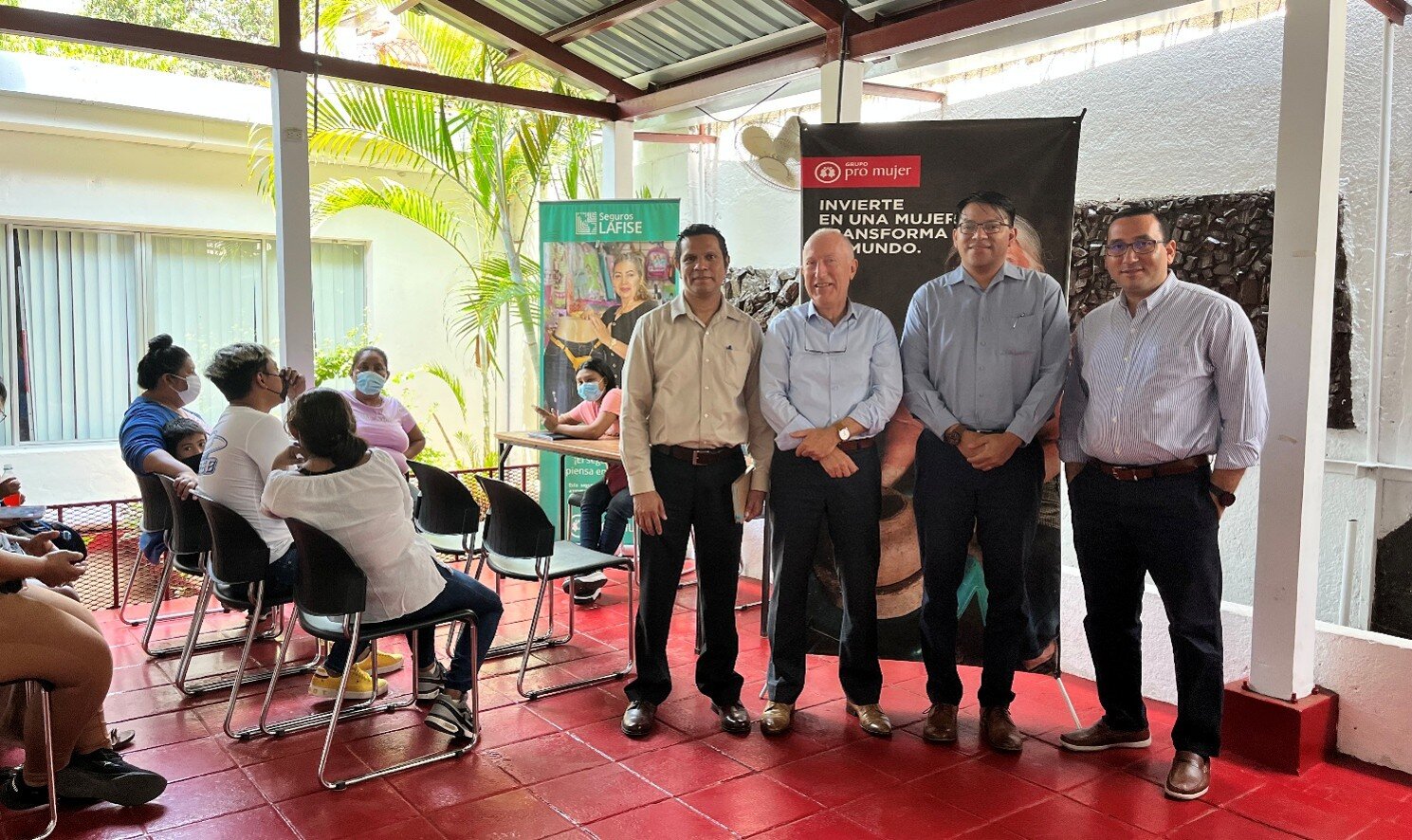
DWM focuses on underserved populations, especially women and low-income households, by partnering with inclusive local financial institutions serving them in developing countries. As a pioneer in impact investing, DWM shaped their approach in 1999 through the Pro Mujer Loan Fund. A nonprofit development organization providing health, financial inclusion, and education programs to low-income women in Latin America, Pro Mujer was originally considered by DWM for a philanthropic donation. However, DWM took a longer view and questioned the sustainability of one-time grant funding: a grant can be powerful, but it is typically spent once and must be replenished, which can limit the sustainability and scalability of a program. DWM therefore redesigned its contribution into a blended finance structure, where donated capital provided a first-loss layer, enabling additional low-cost lending from impact-minded investors.
Approach
DWM organizes its lending around three themes: financial inclusion - expanding access to finance for underserved people and SMEs (Small and Medium-sized Enterprises) to support economic growth, climate change, and gender equality. For larger banks, DWM targets a defined segment--such as microenterprise lending, women-owned SMEs, green lending, or climate-resilience finance--and structures loans so that proceeds are designated to that segment rather than absorbed into the bank's general balance sheet. Key to both the due diligence and management steps is DWM's Impact IQ questionnaire tailored to different business models. Notably, the Impact IQ is reviewed alongside the credit evaluation so that impact and financial risk are assessed together instead of as a separate exercise.
Impact & Results
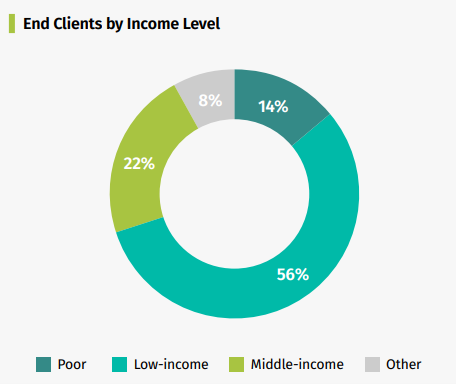
Demonstrating the sustainability of this approach through its own 25-year longevity, DWM has to date invested over $3 billion in private debt and $150 million in private equity across more than 60 developing countries. At the end of 2024, its portfolio comprised 80 companies in 33 countries serving 25.5 million end clients, showing that disciplined partnerships and a clear understanding of region-specific risks and how to mitigate them are key to impact investing success.
Future Outlook
DWM attempts to play an educating role, supporting these institutions to recognize and build new lines of business that serve underserved communities by combining financing with clear impact expectations and credit discipline. Co-founder Peter Johnson describes this as "double impact": financing an impactful activity, while also helping a local institution expand into impact-aligned lending as a sustainable business. Overall, Peter Johnson's message is fundamentally about perceived risk versus experienced risk with the right partner: "the actual risks of investment in developing markets in the spaces of healthcare, financial inclusion, climate adaptation and gender equality, are remarkably lower than common thinking."