
- New
Ensuring Sustainable Impact in High-Risk Contexts
The South Saharan Social Development Organization
Headquarters: Nigeria
Project Country: Nigeria
Keywords: Water, Sanitation, and Hygiene (WASH), Impact Measurement & Management (IMM), insecure environments, humanitarian contexts, community governance, proxy indicators, adaptive evaluation, security-by-design, sustainability
Summary
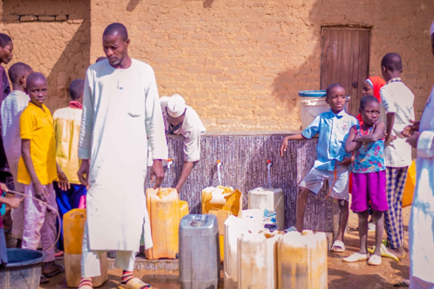
While the gap in Water, Sanitation, and Hygiene (WASH) access remains a critical public health challenge in Nigeria, high insecurity, complex local politics, and the impracticality of data collection hinder traditional impact measurement & management (IMM) practices. The South Saharan Social Development Organization (SSDO), a Nigerian non-profit, has successfully adapted IMM practices to this context through (i) measurement methods that ensure staff safety, and (ii) sustainable impact management practices hinging on securing physical infrastructure and local community governance. SSDO's experience offers critical lessons for impact investors and practitioners on how to deliver and measure sustainable value in complex humanitarian environments.
Key Figures
| 160,000 People provided with access to clean water |
1.2M+ Individuals Reached through WASH initiatives |
79.2% Reduction in Child Diarrheal Disease Incidence |
Partner's Information
South Saharan Social Development Organization (SSDO) is committed to supporting the emergence of a truly developed Sub-Saharan Africa. The organization recognizes that meaningful and sustainable development begins with the transformation of individuals -- through greater awareness, opportunity, dignity, and self-reliance. Driven by this vision, SSDO designs and implements programs that promote the mental, socio-economic and , physical well-being of the most marginalized and underserved members of society, particularly women and girls. Through the dedication of its passionate team members and community partners, SSDO continues to create pathways toward inclusive and sustainable social development.
Background & Challenge
As SSDO operates in high-risk humanitarian hotspots like Katsina State, its work confronts a dual challenge: ensuring the sustainability of infrastructure in insecure environments and measuring impact where traditional data collection is impossible. In Katsina, where the poverty rate surpasses 70%, banditry and kidnapping incidents were reported by more than 96% of respondents to a UNICEF survey. In this context, traditional Monitoring & Evaluation (M&E) frameworks often cannot be applied, as they generally require household surveys and long-term on-site presence - data which could not be collected without exposing staff to risks stemming from local instability. As the primary implementing partner for Latter Day Saints Charites and WaterAid Nigeria in the region, SSDO faced a critical dilemma: how do you prove impact to donors when you cannot stay on the ground to measure it, and how do you ensure the sustainability of programs when infrastructure stability is low?
Approach
To build long-term, sustainable impact, SSDO radically adapts both their measurement strategy and their physical implementation to the reality of the field. On the impact measurement side, SSDO has developed a practical approach to M&E frameworks. For example, in their WASH project in Katsina, SSDO proposed to their donor the use of a single, high-sensitivity proxy indicator: the incidence of diarrheal disease in children under-five reported at local clinics. Instead of potentially dangerous door-to-door surveys, staff retrieved anonymized data from local Primary Health Centers (PHCs), allowing for data collection in under one hour.
On the impact management side, SSDO develops a security-by-design model that integrates deep community governance with defensive engineering to ensure the survival of the infrastructure and the impact it generates. When security risks prevented on-site training in Katsina, SSDO transported 20-25 youth leaders from the community to a "safe town" two hours away. There, they conducted an intensive five-day training, equipping these youths with flip charts and stipends to return home and conduct the door-to-door awareness-raising that SSDO staff could not safely perform themselves.
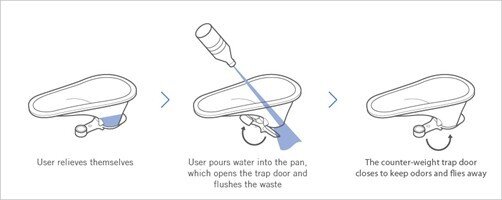
The organization is also targeting systemic impact: in Enugu, their holistic model of combining infrastructure with Community-Led Total Sanitation has placed communities on the path to being certified Open Defecation Free (ODF) by UNICEF. This includes the adoption of SaTo pan toilets to bridge the gap between open defecation and expensive septic systems.
Impact & Results
SSDO's context-first target-setting strategy in the Katsina WASH project was validated as its goal of a 15% reduction in disease incidence was largely surpassed: during August - typically the peak of the rainy season when waterborne diseases spike - the reduction reached a level of 79.2%. Across 15 projects in 10 years, SSDO has reached more than 1.2 million individuals through its WASH initiatives, for example providing 160,000 people with access to clean water and delivering improved sanitation and hygiene services to over 550,000 citizens across Nigeria.
The organization's commitment to leaving no one behind can be seen in its targeted interventions for vulnerable populations. For example, in Karonmajigi, Abuja, SSDO partnered with the Embassy of Switzerland to construct a 10,000-liter solar-powered borehole specifically for a Persons with Disabilities settlement, ensuring inclusive access for over 5,000 residents.
Future Outlook
While its operational model shows a proven track record, SSDO's representative points out that there is no shortcut to expanding impact: contextual adaptation is non-negotiable for each project. Simultaneously, SSDO continues to drive systemic change by advocating for local governments to enact sanitation bye-laws, ensuring that the behavioral shifts they engineer are backed by legal enforcement.