
- New
Global Health Investment Corporation - Innovative Approach for Improving Global Health
The Global Health Investment Corporation (GHIC) was established in 2012 with the support of Gates Foundation as an independent not-for-profit corporation with the mission to catalyze the development of technologies to improve health worldwide. GHIC utilizes a blended finance approach, mobilizing private, public, and philanthropic capital to accelerate the development, commercialization, and access to products and technologies that improve global health and strengthen health security.
Combating Urgent Public Health Challenges
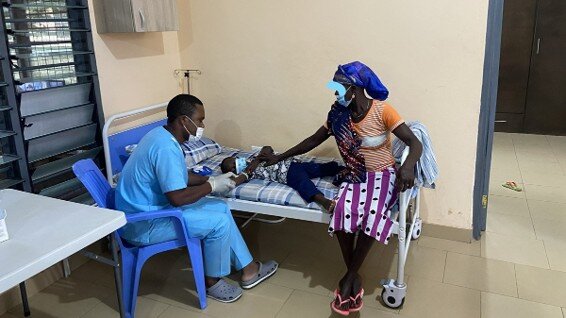
GHIC's Inaugural Global Health Investment Fund (GHIF) was an innovative $108 million fund designed to fill crucial financing gaps for products targeting infectious diseases and maternal and child health challenges in low- and middle-income countries (LMICs). GHIF invested in 12 companies developing diagnostics, vaccines, and treatments targeting diseases such as HIV/AIDS, tuberculosis, malaria and cholera, affecting millions in developing countries. The fund's portfolio companies have successfully registered sixteen products that have reached over 600 million people.
GHIF employed a flexible approach to structuring investments with preferred equity, convertible debt, and project finance to tailor each transaction to the product or company being financed. This approach expanded the universe of investable opportunities and enabled customized investment structures to manage downside risks and capture upside opportunities.
"Global health R&D was an area of life sciences that had been historically underfunded by private capital relative to other commercial indications," noted the GHIC team. "Ultimately, GHIF proved to be successful from both an impact and financial perspective, and its success has catalyzed significant additional private investment in global health product development."
The Roles of Stakeholders
GHIC is supported by leading global health investors and stakeholders. The broad group of partners were engaged in different ways and were critical for achieving success.
The German Government, through its KfW Development Bank and the Federal Ministry for Economic Cooperation and Development (BMZ), provided a grant to GHIC, rather than a direct investment in GHIF, to enable GHIC to invest in GHIF and recycle its distributions into future global health investments. This unique structure has been an important part of GHIF's legacy, allowing GHIC to recycle its distributions into additional global health investments, and it served as a template for recycling structures in GHIC's other strategic investment partnerships (note: see below for additional details on the most recent GHIC-KfW partnership development, the Catalytic Health Investment Platform).
The Gates Foundation, together with Swedish International Development Agency (Sida), provided a loss protection/guarantee to help catalyze and derisk private investment in GHIF given GHIF's innovative model. The Foundation also played a central role in GHIF's Charitability Oversight Committee, which helped ensure GHIF's investments were within the global health mission of the fund. Finally, the Gates Foundation played a significant role in GHIF's Scientific Advisory Committee, along with GSK, Merck and Pfizer, providing input and advice on scientific strategy and technology evaluation.
"With the support of mission-driven stakeholders, including leading charitable foundations, development finance institutions, pharma companies, and family offices, GHIF benefitted from a highly aligned and well-connected base of support. This enabled a network effect, unlocking high-quality investment opportunities coupled with direct access to unique due diligence resources," the GHIC team recalls.
Global Access Commitments (GACs)
GHIC's investment strategy catalyzed more than $1.0 billion in additional investment in global health product development, spurring health innovation and benefiting underserved communities. To help ensure the impact objectives of GHIC, each GHIF investment incorporated Global Access Commitments (GACs). Specific GACs were developed for each funded product/technology, focusing on product registration, distribution and reach (i.e., lives touched, improved, etc.). GACs were modeled after best practices developed by the Gates Foundation during the prior decade of funding global health innovations.
Although GACs were generally a novel concept for target companies and co-investors alike, by embodying a collaborative approach with appropriate oversight measures, GHIF was able to include GACs in each of its investments to promote the registration and deployment of registered products in LMICs, with the ultimate goal of making products accessible to under-served populations around the world. "Double bottom-line success would not have been possible without GACs to ensure alignment with GHIF's social impact objectives," stated GHIC.
Key Example of Impacts Produced in LMICs: EuBiologics
Cholera, an acute diarrheal illness, is a persistent global health challenge that researchers estimate causes up to 4 million cases and over 100,000 deaths worldwide annually. At the time of GHIF's launch, two WHO-prequalified vaccines for cholera existed; however, the lack of supply driven by limited funding and production capacity remained a challenge for cholera control. In 2013, Gavi's¹ approval of funding for cholera vaccine procurement created an opportunity to catalyze production for the public sector through a new market entrant: EuBiologics, an emerging South Korean vaccine manufacturer with an oral cholera vaccine (Euvichol) approaching registration.
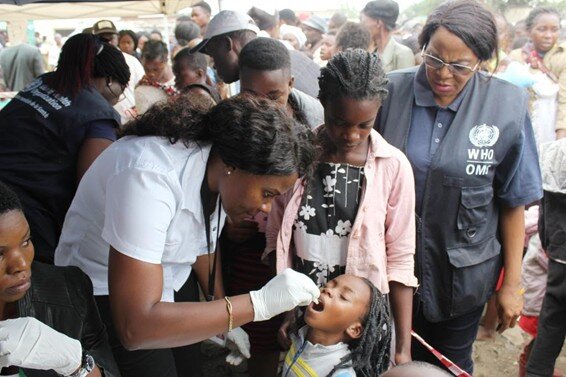
In 2014, GHIF led EuBiologics' $5.0 million Series B financing and provided the company with a $2.5 million loan. The financing supported expansion of manufacturing capacity, completion of clinical development, and WHO pre-qualification. From 2015 to 2017, EuBiologics' entry into the cholera vaccine market resulted in a dramatic increase in oral cholera vaccine production, from approximately 4 million doses to 29 million doses, with a 30% reduction in price. On the heels of commercial and global health impact success, EuBiologics successfully completed an IPO and listed on the KOSDAQ exchange in 2017. As of the end of 2025, EuBiologics has produced more than 230 million oral cholera vaccines for distribution, including in Yemen, Haiti, Zambia, Somalia, Malawi, Nigeria, Zimbabwe, and Uganda. EuBiologics remains the sole supplier of oral cholera vaccines for LMICs through the WHO Global Stockpile and is continuing to scale up capacity to produce 90 million cholera vaccine doses per year.
GHIC Today
Building on the success of GHIF, GHIC and KfW launched the Catalytic Health Investment Platform (CHIP), a twenty-year partnership between GHIC and the Government of Germany, through KfW and the Federal Ministry for Economic Cooperation and Development (BMZ), to accelerate the development of public health technologies and products to improve global health. Through CHIP, GHIC and KfW continue to expand GHIC's model to catalyze health innovations that meet the needs of people in LMICs.
Most recently, GHIC announced the launch of its newest fund, Global Health Security Fund, L.P. (GHSF), with $353 million in commitments. GHIC launched GHSF with support from the U.S. Government's Biomedical Advanced Research and Development Authority (BARDA) and other mission-aligned investors to accelerate the development of technologies and products that strengthen global health security. Funding was also committed by KfW through the CHIP partnership.
GHSF invests in companies developing medical countermeasures and other technologies that have both health security impact and commercial market potential. GHSF's portfolio includes companies developing innovative products and platforms to address critical gaps in global health preparedness and response, with a focus on vaccines, therapeutics, diagnostics, and enabling technologies to prevent and minimize the damage of public health emergencies.
GHSF builds on GHIC's experience at the intersection of global health and private capital, leveraging its network across government, industry, and the scientific community to identify and support high-impact technologies.
Together, GHIF, CHIP and GHSF demonstrate how GHIC's innovative investment model has evolved, scaled and catalyzed public and private investment to improve and save lives and strengthen health security globally.
1Gavi, The Vaccine Alliance: https://www.gavi.org